
After tornadoes and windstorms
Demolition Little Rock: Storm Damage Demolition in Little Rock
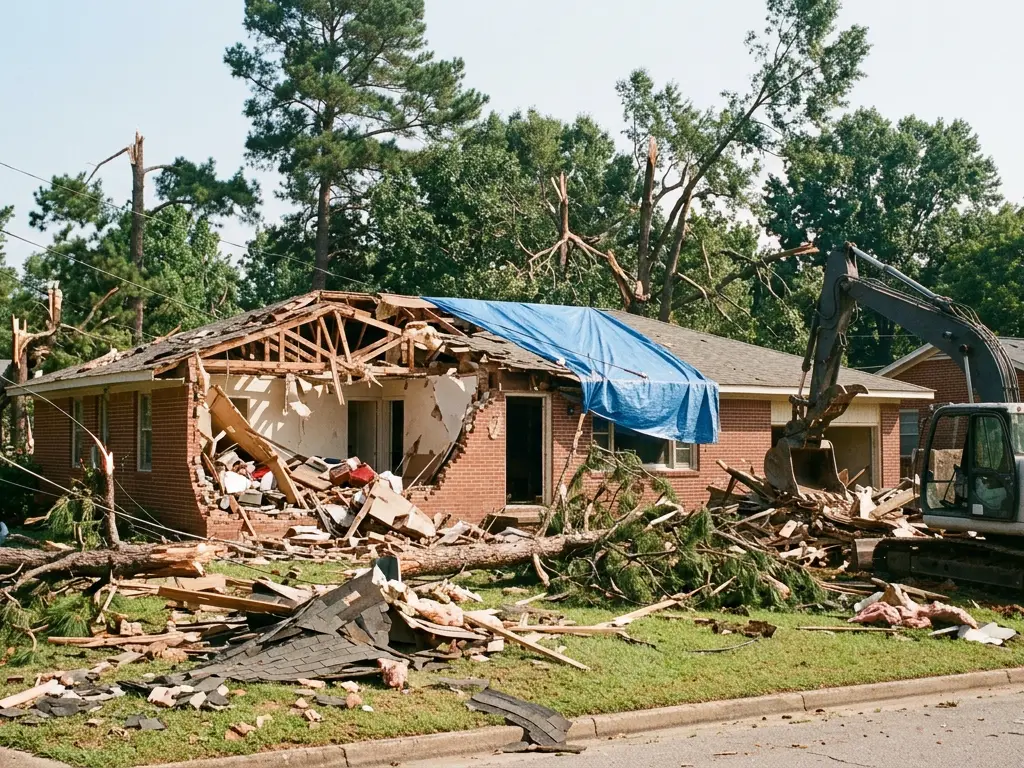
Houses, garages and outbuildings left unsafe by a tornado, straight-line wind or a fallen tree, taken down in the right order for the insurance claim and cleared to a level lot.
- Little Rock and 12 nearby towns
- Written price before work starts
- Permit and utility steps explained
- Houses, pools, garages and slabs
- Lots left level and swept
Demolition Little Rock arranges demolition of storm-damaged buildings in Little Rock and the nearby towns, a need this area knows well. The EF3 tornado of March 31, 2023 crossed Little Rock and North Little Rock with peak winds near 165 mph, leaving nearly 600 structures with major damage and more than 2,700 affected, and the cleanup that followed showed how many houses could be repaired and how many could not.
Taking down a storm-wrecked house promptly is typically $7,500 to $15,000; one left open to the rain for months rots, sags and partly collapses, which makes the same teardown slower and more expensive and leaves the owner liable if it falls onto a neighbor.
Describe the building, its size and what it is made of, and hear a typical price range before anyone drives out.
Call (501) 222-3828Signs a storm-damaged building needs to come down
- Roof structure torn off or rafters snapped across a large part of the house
- Exterior walls pushed out of plumb or partly collapsed
- The house shifted on its foundation or piers
- A large tree through the structure, not just the roof covering
- An insurer or engineer calling it a total loss
The order matters for the claim
- Document first. Photographs of every side and every room you can safely see, before anything is moved.
- Adjuster. Let the insurer inspect, or get written permission to start if they cannot come quickly.
- Make safe. Tarping, fencing and removing hazards that threaten people or neighbors is usually allowed right away.
- Utilities. Gas and power are cut at the street by the utilities before machines work near the structure.
- Demolish and clear. Once the claim allows it and the permit is in place.
After big events, cities sometimes relax or speed up permits for storm debris, and federal or state aid can cover debris pickup from the curb. Demolition of a private house is still usually the owner's responsibility, so check what applies to your address.
Why storm debris is harder than a planned teardown
A planned demolition takes a building apart in a deliberate order. A storm has already pulled it apart in a random one: walls held up by debris, roof sections hanging, broken glass and wiring tangled through everything, and trees across it all. The crew works from the outside in, takes down the most unstable parts first, and cuts trees away from the structure before the grapple goes near it.
Describe the building, its size and what it is made of, and hear a typical price range before anyone drives out.
Call (501) 222-3828Pines, oaks and the trees that come with it
Little Rock's tall loblolly pines and old oaks are often what turns wind damage into structural damage. Trees lying across a house are cut and removed as part of the job; whole trees and stumps elsewhere on the lot can be added if you want the lot fully cleared. Storm-damaged trees still standing next to the house are worth a look too, because they can fail in the next storm.
Describe the building, its size and what it is made of, and hear a typical price range before anyone drives out.
Call (501) 222-3828Rebuilding or selling the lot
Many owners rebuild after a storm. If you will, tell the crew so the foundation is handled the right way for the rebuild, and see the teardown and rebuild page. In the parts of North Little Rock and Jacksonville where storm damage clusters, a cleared, level lot sells or rebuilds far faster than a damaged house.
Questions people ask
How much does it cost to demolish a storm-damaged house in Little Rock?
Typically $7,500 to $15,000, like an ordinary teardown, with extra time for tangled debris and fallen trees.
What are the signs a storm-damaged house cannot be repaired?
Roof structure torn away, walls out of plumb or collapsed, the house moved on its foundation, or a tree through the structure.
Should I wait for the insurance adjuster before demolition?
Yes, or get written permission to proceed. You can usually make the site safe right away, but demolishing before the inspection can complicate the claim.
Does insurance cover storm demolition?
Many policies cover demolition and debris removal when a covered storm destroys a house. Check the debris removal limit in your policy.
Who removes trees that fell on the house?
Trees on the structure are removed as part of the demolition. Other trees and stumps can be added to the job.
How long does a storm demolition take?
One to three days of machine work for most houses, once the claim and permit allow it.
Have something that needs to come down?
A house, a garage, a pool or a slab. Call with the address and the size, and get a typical price range and the permit steps that apply to it.
Call (501) 222-3828