
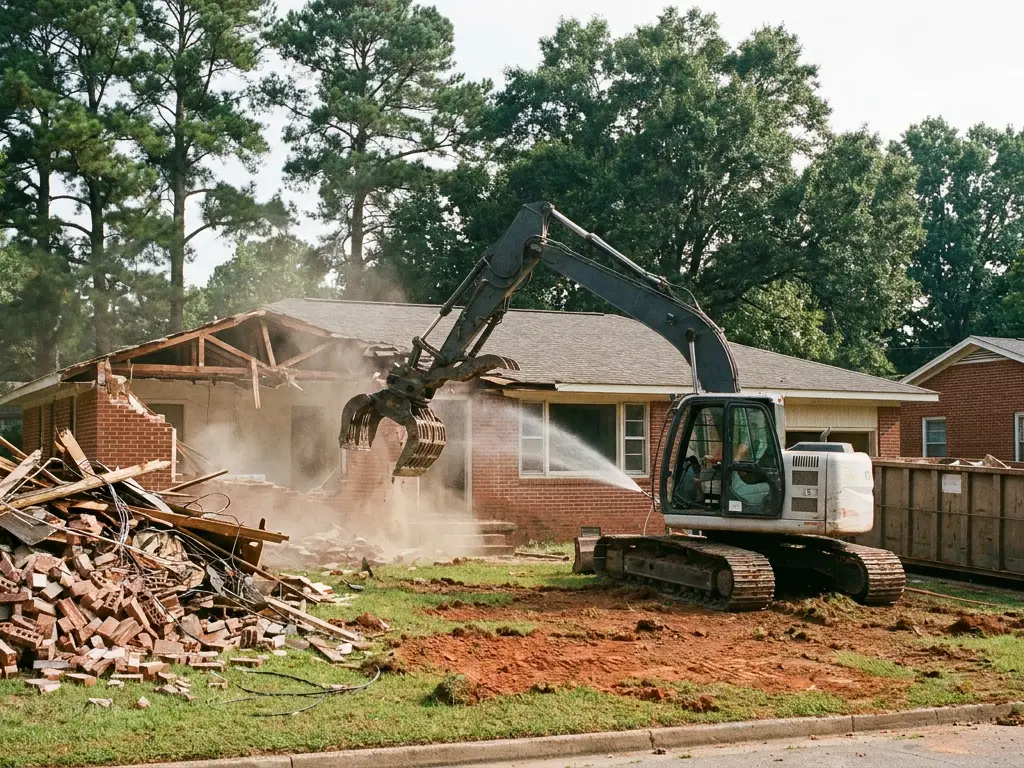
The day the house comes down
Demolition Little Rock: What to Expect on Demolition Day in Little Rock
What happens from the moment the trucks arrive to the last load leaving, so you, and your neighbors, know what to expect.
- Little Rock and 12 nearby towns
- Written price before work starts
- Permit and utility steps explained
- Houses, pools, garages and slabs
- Lots left level and swept
Demolition Little Rock wrote this for owners who have never watched a house come down. The permits are in, the utilities are off, the sewer is sealed and the date is set. Here is what usually happens next on a typical Little Rock house demolition, hour by hour and day by day, and what you should do before the crew arrives.
Clearing out the house yourself before demolition day costs a weekend; leaving furniture, appliances and junk inside adds hauling and tipping fees that can run $400 to $800 a truckload.
Describe the building, its size and what it is made of, and hear a typical price range before anyone drives out.
Call (501) 222-3828Before the crew arrives
- Remove anything you want to keep, including fixtures, doors, plants and items in the garage or shed.
- Confirm with the contractor that gas, power and water are disconnected and the sewer is sealed.
- Move vehicles off the driveway and the street frontage.
- Tell your neighbors the date; a friendly warning about noise and trucks goes a long way.
- Mark any trees, fences or structures that must not be touched.
Arrival and setup
The excavator usually arrives on a lowboy trailer, along with roll-off dumpsters or dump trucks. The crew walks the site, checks the utility disconnects and the permit, sets up a water supply for dust control, and puts up temporary fencing if the lot is near a sidewalk or a busy street. In tight older neighborhoods such as the Heights or Hillcrest, setup includes planning where the machine can stand without damaging trees or overhead lines.
Describe the building, its size and what it is made of, and hear a typical price range before anyone drives out.
Call (501) 222-3828The teardown itself
Most houses come down in a deliberate order: the roof and upper structure first, pulled inward with the grapple, then the walls, then the floor system. Debris is sorted as it comes down where it pays to sort, with metal set aside for scrap and brick or concrete for recycling. A typical one-story house is on the ground within a day; loading it out takes longer.
Water spray keeps dust down throughout. Expect noise, the sound of breaking brick and the rumble of trucks during working hours, but not a cloud of dust drifting over the neighbors if the crew is doing it right.
Foundation, haul-off and grading
Once the house is down and loaded out, the foundation is broken out if it is part of the job, footing holes and any crawl-space or basement cavity are filled and compacted, and the lot is graded to drain. Debris goes to a permitted construction and demolition landfill or a recycler. The last step is usually seed or straw on the bare ground to hold the soil, which matters on sloping lots in North Little Rock and elsewhere.
After the crew leaves
- Walk the lot with the contractor and check the grade, the edges and any trees or fences that were to be protected.
- Ask for landfill or recycler receipts if they were not provided.
- Keep the permit and any asbestos paperwork with the property records.
- Water new seed if the weather is dry, and watch for settling in filled areas after the first heavy rains.
If the lot is being rebuilt, the builder can usually start as soon as the pad is compacted and the new permit is issued. The house demolition page explains how foundation removal is handled for a rebuild.
Describe the building, its size and what it is made of, and hear a typical price range before anyone drives out.
Call (501) 222-3828What neighbors will notice, and how to help
Neighbors will hear the excavator, see trucks coming and going, and possibly feel a little ground vibration when heavy walls drop. A note on their doors a few days ahead, with the dates and a phone number, heads off most complaints. Ask the crew to keep trucks off neighbors' lawns, to sweep the street at the end of each day, and to keep dust down with water, especially on dry, windy days.
On tight lots in older neighborhoods, the crew may need to work close to a property line. Point out fences, gardens and trees on the neighbors' side too, not just your own.
Weather and demolition day
Light rain rarely stops a demolition, and it helps keep dust down. Heavy or steady rain is different: loaded trucks rut a wet lot, and backfill cannot be compacted properly into wet clay, so grading may wait for a drier day. Lots on poorly drained ground, such as parts of Maumelle and Shannon Hills, are the most likely to need a dry spell. The teardown itself can often go ahead even if the finish grading waits.
If something unexpected turns up
Demolition sometimes uncovers things nobody could see: an old buried oil tank, a forgotten septic tank, a cistern, or suspect material that was hidden inside a wall. A good crew stops, tells you, and explains the options before going on. An oil tank or a septic tank is emptied and removed or properly abandoned; suspect material is tested before work continues. Ask your contractor at the start how surprises are priced, so a discovery on demolition day becomes a short pause rather than an argument.
Questions people ask
How long does demolition day take?
The house itself usually comes down in a day; loading out, foundation removal and grading take one to three days in total.
Do I need to be there on demolition day?
It helps to be there at the start to confirm what stays, but many owners are not, especially when the house is empty.
Will there be a lot of dust?
A good crew sprays water throughout to keep dust down, so neighbors should see far less than they expect.
What should I remove before demolition?
Anything you want to keep, plus furniture, appliances and trash, which otherwise add hauling and tipping fees.
What are the signs the job was finished properly?
A level lot graded to drain, footing holes filled, seed or straw down, protected trees untouched and disposal receipts in hand.
How much does house demolition cost?
About $7,500 to $15,000 for a typical house in the Little Rock area.
What should I tell my neighbors before demolition day?
Give them the start date, the expected working hours, how long the trucks will be around and a phone number to call with any concern. A short note a few days ahead, and a reminder the day before, heads off most complaints about noise, dust or a blocked street.
Have something that needs to come down?
A house, a garage, a pool or a slab. Call with the address and the size, and get a typical price range and the permit steps that apply to it.
Call (501) 222-3828